
Products

Vacuum Vapor Deposition Coating
Classification:
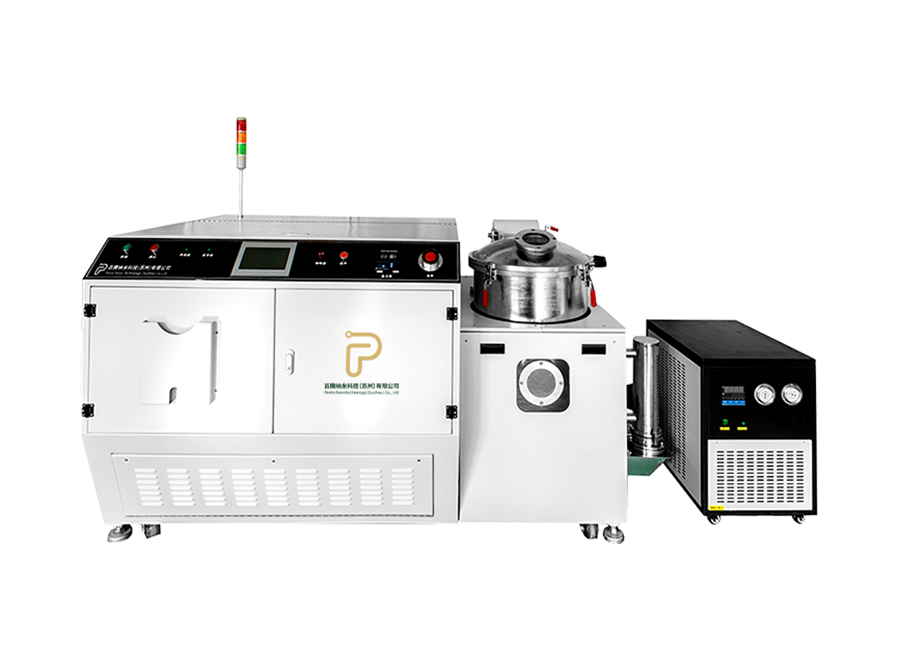
CVD Vacuum Equipment
Item:PTP-9Va
Dimensions: (L)4700*(W)3100*(H)1800 mm
Chamber size: Φ900*900 mm
Electric quantity: 10,000W
This device is equipped with a PLC control system, which can automatically adjust the evaporation speed and ensure the uniformity of the deposition pressure.
The operation interface adopts a full touch-screen human-computer dialogue mode, making the operation much more convenient.
Two sets of cylinder devices, facilitating the placement of products that need coating before the coating process, eliminating the need for manual handling.
Equipped with vacuum pumps and rotary pumps, it can accelerate the pumping speed, enhance the coating efficiency, and reduce the coating cost.
The coated chamber adopts a front-opening design. The chamber is large in size, it is suitable for large-sized products and mass production of coating by enterprises.
Product Description
【Operating Principle】
The parylene coating equipment is a vacuum coating system that uses the chemical vapor deposition (CVD) process. The entire working process takes place in a vacuum environment and mainly consists of three core steps:Vaporization-Pyrolysis-Deposition
It is specifically designed to form ultra-thin and uniform parylene protective coatings, providing comprehensive protection for the products.
【Advantages】
Excellent conformality, capable of uniformly covering complex shapes, sharp edges, and crevices;
Uniform film layer, thickness can be precisely controlled, with a thickness uniformity of ±5%;
Excellent protective performance, featuring high insulation strength, resistance to high and low temperatures (-200°C to 350°C), corrosion resistance, resistance to acids and alkalis, waterproof and moisture-proof properties;
【Application】
Aerospace and Defense、Medical Devices、Automotive 、Electronics and Semiconductor 、Elastomers、etc

【Why choose Penta Nano】
Reliable
Recipe-based automation ensures reproducible coatings to meet stringent quality standards
Low Maintenance
Precision engineering and robust materials minimize the need for frequent downtime or repairs.
High Quality
Penta’s equipment is CE certified to meet EU safety, health and environmental protection requirements.
Previous
Extremely Large Capacity Parylene Coating Machine
Application Area


FAQ


Blog
Knowledge
2026-07-28
Exploring the Benefits of Solvent-Free Waterproof Coatings in Modern Applications
Solvent-free waterproof coatings represent a significant advancement in the field of chemical materials, particularly within the niche of nanotechnology. These coatings are specially formulated to provide effective waterproofing properties without the use of solvents, which can often contain harmful volatile organic compounds (VOCs). This innovation is particularly pertinent in today's environment
Lern more
Knowledge
2026-07-24
What Makes Nano Waterproof Coating Essential for Electronics?
Understanding Nano Waterproof Coating in Electronics The Science Behind Nano Coatings Nano waterproof coatings are advanced materials engineered at a molecular level to create a protective barrier against moisture, dust, and other environmental contaminants. These coatings are typically composed of nanoparticles, which are materials that measure between 1 and 100 nanometers. The unique properties
Lern more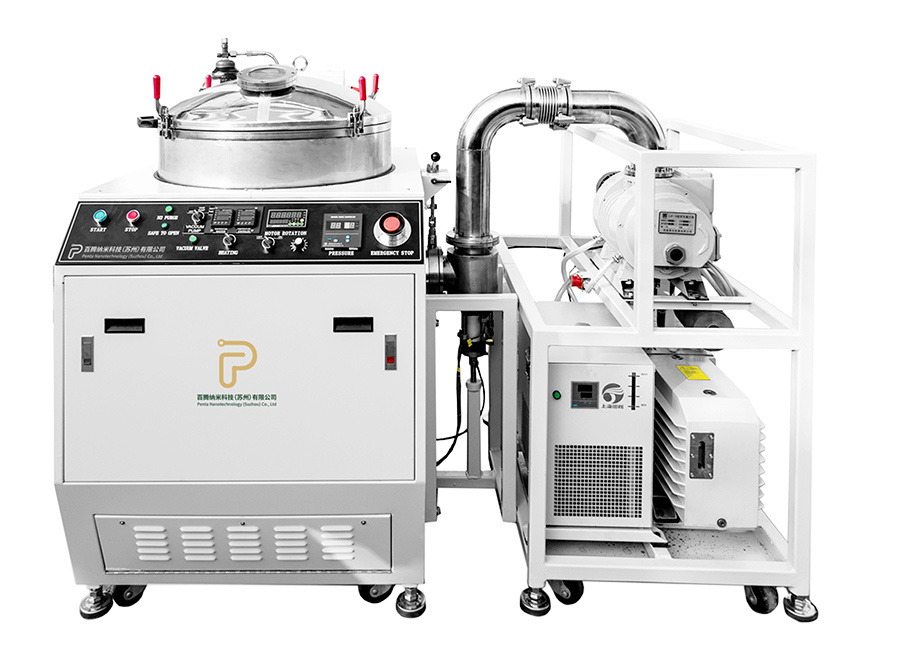
Knowledge
2026-07-20
Exploring the Benefits and Applications of Vacuum Electroplating in Industrial Equipment
Vacuum electroplating is a cutting-edge technique that involves depositing a thin layer of material onto a substrate within a vacuum chamber. This process not only enhances the aesthetic appeal of products but also significantly improves their durability and functionality. The primary advantage of vacuum electroplating lies in its ability to produce high-quality coatings that are uniform and adher
Lern moreSubscribe to Newsletter


